
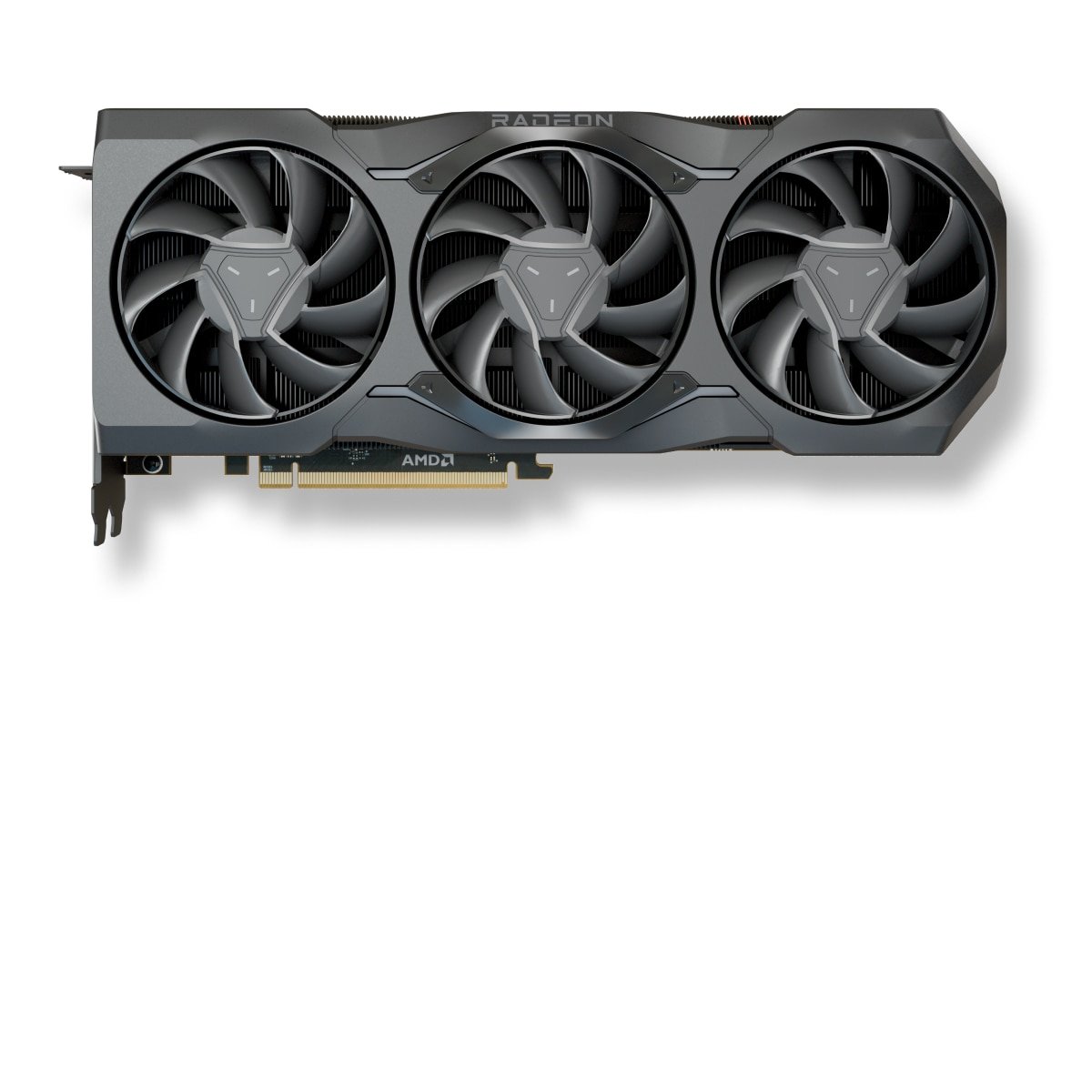
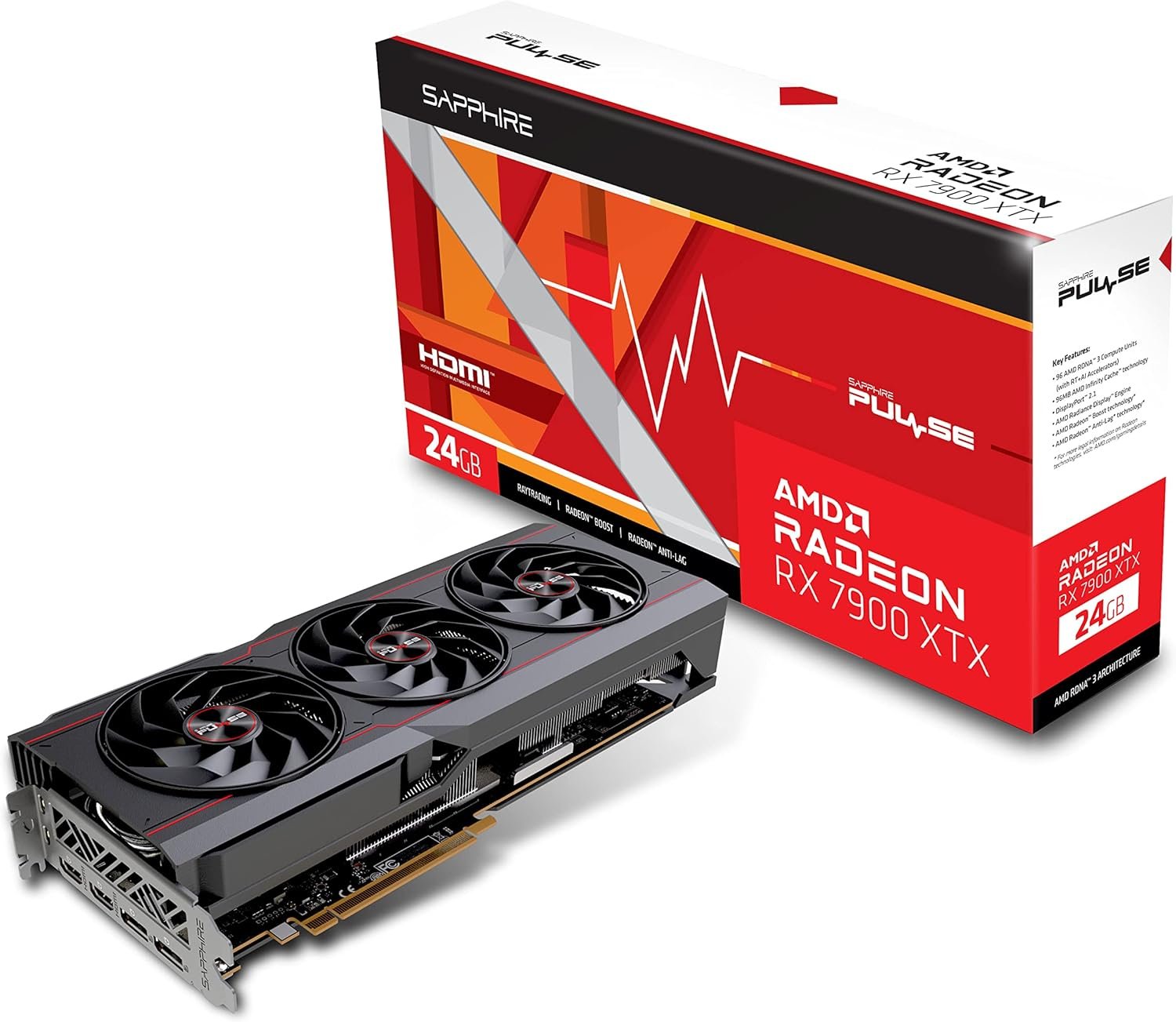
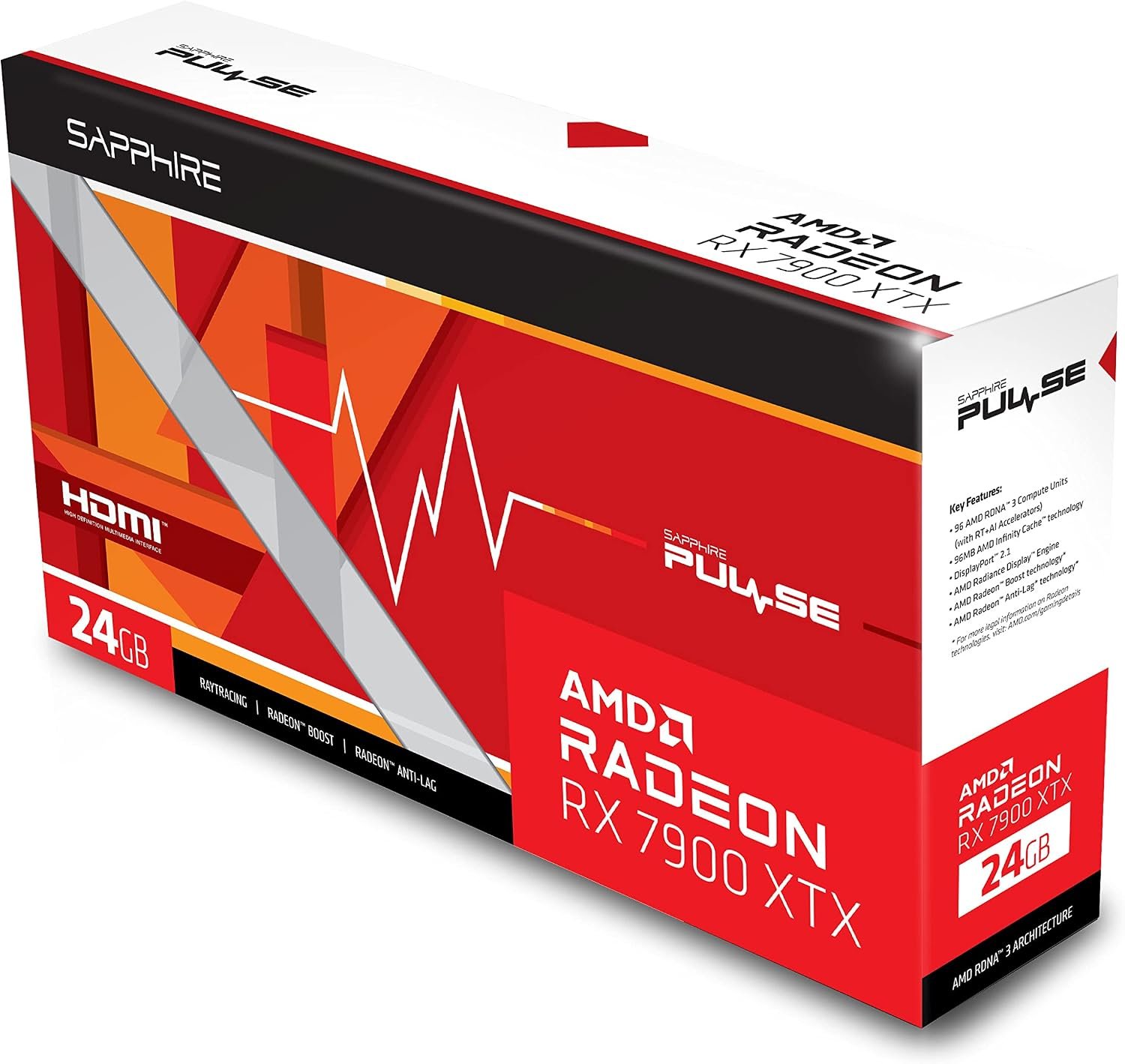
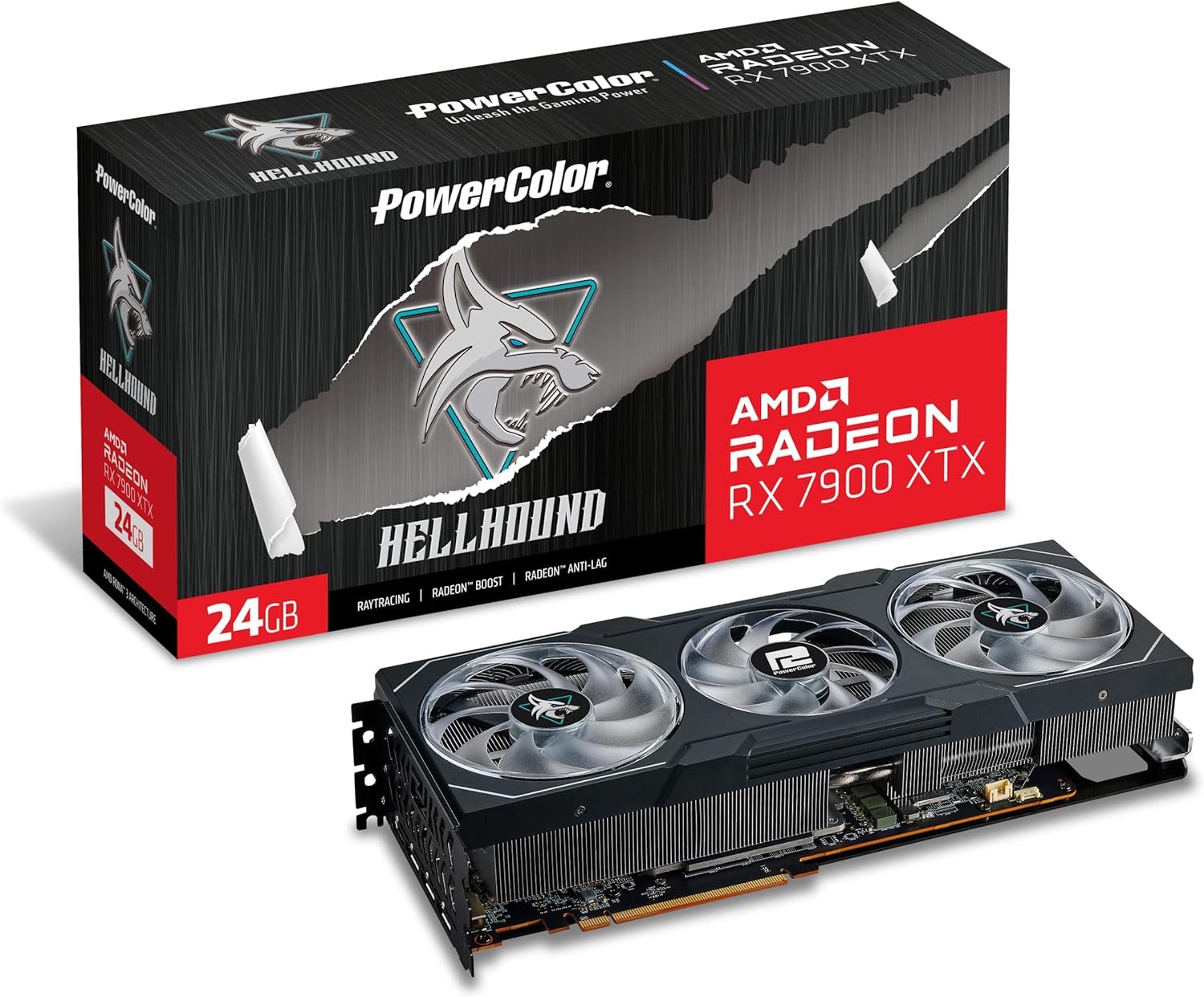

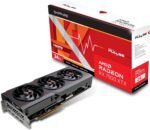

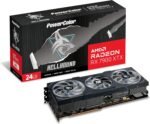

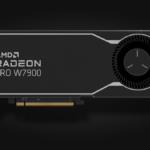

AMD Radeon RX 7900 XTX (24GB)
$899.00
AMD’s RDNA 3 flagship: 24GB GDDR6, 96 compute units, chiplet design.
The AMD Radeon RX 7900 XTX is AMD’s flagship RDNA 3 gaming card, and it’s still one of the strongest value propositions in high-end graphics — the first consumer GPU to use an advanced chiplet design, giving it a huge 24GB memory pool and near-flagship performance at a price well below the equivalent NVIDIA tier. For gamers chasing high-refresh 4K, streamers who need serious encode headroom, and Linux users who want a fully open driver stack, the 7900 XTX earns its place at the top of AMD’s lineup.
Key Features
- Chiplet-based Navi 31 GPU — a 5nm graphics compute die paired with six 6nm memory cache dies (MCDs), the first gaming GPU to split compute and memory logic across separate chiplets for better yields and cost efficiency.
- 96 Compute Units, 6,144 Stream Processors — high-throughput parallel compute for rendering, ray tracing, and general GPU workloads.
- 24GB GDDR6 on a 384-bit bus — more memory than NVIDIA’s equivalent-tier competition, at up to 20Gbps for 960GB/s of raw bandwidth.
- 96MB AMD Infinity Cache — a large on-die cache that lifts effective memory bandwidth up to 3,500GB/s, keeping the GPU fed at 4K and beyond without a wider (and costlier) memory bus.
- 96 second-generation Ray Accelerators and 192 AI Accelerators — dedicated hardware for ray tracing and AI-assisted upscaling (FSR) workloads.
- Up to 2,500MHz boost clock (2,300MHz game clock) — high sustained clocks for consistent frame rates under load.
- 61.4 TFLOPS FP32 — strong raw compute for both gaming and GPU-accelerated creative applications.
- ROCm support on Linux — an open-source path into PyTorch-based AI/ML development, something no NVIDIA gaming card offers without proprietary CUDA tooling.
Flagship 4K Gaming Without Flagship Pricing
At native 4K, the RX 7900 XTX trades blows with NVIDIA’s previous-generation flagship class while typically undercutting it meaningfully on price — for buyers who prioritize raw rasterization performance and memory capacity over the very best ray tracing or AI upscaling quality, that’s a compelling trade. 24GB of VRAM also future-proofs the card against the growing texture and asset sizes of modern AAA titles far better than 16GB competitors, and it means the 7900 XTX can double as a genuinely capable local AI card for image generation and smaller LLM inference — something a 12GB or 16GB card simply can’t do as comfortably.
Content creators benefit from AMD’s dual encode engines and strong OpenCL/HIP compute performance in supported applications, while streamers get enough encode headroom to broadcast at high quality without tanking in-game frame rates. It’s worth being candid about where AMD’s ecosystem is behind: DLSS and ray tracing quality still generally lead FSR and AMD’s ray accelerators in the most demanding path-traced titles, and ROCm — while genuinely open and improving fast — doesn’t yet have the plug-and-play maturity of CUDA for AI/ML work, particularly on Windows. Support is strongest on Linux, where ROCm is officially validated for this GPU.
For buyers who want the most VRAM and raw performance per pound in AMD’s lineup, are comfortable with FSR instead of DLSS, and want the option to dabble in open-source AI development, the RX 7900 XTX remains a genuinely excellent flagship-tier card — chiplet engineering that delivers real value rather than just a manufacturing curiosity.
It’s also worth weighing this card against upgrading from an older mid-range or previous-generation flagship: the jump in compute units, memory bandwidth, and VRAM capacity is substantial enough that games running at 1440p today have real headroom to move up to native 4K, and titles that felt VRAM-constrained on an 8GB or 12GB card simply won’t be an issue here. Combined with a driver suite (Adrenalin) that’s matured considerably in recent years and now offers strong feature parity for streaming, recording, and performance tuning, the RX 7900 XTX is a well-rounded flagship purchase rather than a card that only wins on a single spec sheet line.
Specifications
- Architecture: AMD RDNA 3 (Navi 31), chiplet design — 5nm GCD + 6nm MCDs
- Compute Units: 96 (6,144 Stream Processors)
- Ray Accelerators: 96 (2nd-generation) / AI Accelerators: 192
- Memory: 24GB GDDR6, 384-bit bus, 20Gbps
- Memory Bandwidth: 960GB/s (up to 3,500GB/s effective with Infinity Cache)
- Infinity Cache: 96MB
- FP32 Compute: 61.4 TFLOPS
- Clocks: 2,300MHz game / up to 2,500MHz boost
- Total Board Power: 355W
- Power Connectors: 2x 8-pin PCIe (reference design)
- Interface: PCIe 4.0 x16
- Display Outputs: DisplayPort 2.1, HDMI 2.1, USB-C (reference design)
- Launch: December 2022, original MSRP $999






Ruby T. –
Upgraded from an RX 6800 XT and the jump is massive. Cooler is quiet even under sustained load, which I wasn’t expecting from a card this powerful.
Felix B. –
Run Linux full time and ROCm support has genuinely matured. PyTorch workloads I couldn’t get working reliably a year ago now just run.
Nadia E. –
Great card overall – had one driver hiccup after a big new game release that caused some stutter, but AMD pushed a hotfix within a couple of weeks and it’s been smooth since.
Owen L. –
Performance is excellent but I did notice higher idle power draw with my triple-monitor setup, which I’ve since read is a known RDNA3 quirk rather than a fault. Doesn’t affect gaming performance at all, just something to be aware of.
Callum S. –
Went with this over an RTX 4080 for the extra VRAM headroom and haven’t looked back. Excellent 1440p and 4K performance for noticeably less money.