


Tenstorrent Wormhole n300 (24GB)
$1,399.00
Dual-processor open-source AI accelerator: 24GB, fully open software stack.
The Tenstorrent Wormhole n300 is not a GPU repurposed for AI — it’s a purpose-built AI accelerator, designed from the ground up by Jim Keller’s Tenstorrent around a fully open-source software stack. Each card carries a pair of Wormhole Tensix processors on a single PCIe board, giving researchers, AI engineers, and hardware enthusiasts a genuinely open alternative to closed-driver GPU stacks — full visibility into the compiler, the kernel implementations, and the hardware itself, with nothing hidden behind a proprietary black box.
Key Features
- Dual Wormhole Tensix Processors — two full ASICs on one card, totaling 128 Tensix cores (64 per processor), each core built around Tenstorrent’s signature array of small RISC-V control processors rather than a fixed-function shader pipeline.
- 24GB GDDR6 memory — running at 12GT/sec for 576GB/s of memory bandwidth, enough to hold meaningfully large quantized models for local inference and experimentation.
- 192MB of on-chip SRAM — 96MB per ASIC, a large, fast local memory pool that Tensix cores can lean on heavily to reduce off-chip memory pressure, a distinctive architectural choice versus traditional GPU cache hierarchies.
- Fully open-source software stack — the entire compiler and runtime (TT-Metalium, TT-NN) is open source on GitHub, giving developers low-level access most GPU vendors never expose, and the ability to hand-tune kernels for their exact workload.
- Native multichip mesh networking — 2x QSFP-DD 400GbE ports plus 2x Warp 100 bridge connectors let you link multiple Wormhole cards into larger mesh configurations, scaling compute and effective memory across cards.
- 1GHz AI clock — delivering up to 466 TFLOPS FP8, 262 TFLOPS BFP8, and 131 TFLOPS FP16 across the card.
- PCIe 4.0 x16 host interface — a standard, drop-in interface for any modern workstation or server motherboard.
A Genuinely Open Platform for AI Research
The Wormhole n300’s appeal is fundamentally different from a GPU’s. Where NVIDIA and AMD cards run AI workloads through layers of proprietary or semi-proprietary driver and compiler stack, Tenstorrent publishes essentially everything — the ISA documentation, the compiler source, the low-level kernel programming model — as open source. For researchers building novel model architectures, kernel engineers optimizing for specific operator patterns, or anyone who’s hit a wall with a closed compute stack that won’t let them see what’s actually happening on-silicon, that openness is the entire value proposition. It’s the same philosophy that made RISC-V attractive at the CPU level, applied to AI accelerator hardware — and Tensix cores are themselves built around arrays of small RISC-V processors rather than a traditional fixed-function GPU pipeline.
Practically, the n300 is well suited to local LLM inference on quantized open-weight models, to multichip AI research where the mesh-networking capability lets you scale beyond a single card’s memory, and to teams who specifically want to develop and profile custom kernels rather than rely entirely on vendor-tuned libraries. It is not a drop-in replacement for a mature CUDA or ROCm stack running mainstream, off-the-shelf inference frameworks — Tenstorrent’s ecosystem, while genuinely capable and rapidly improving, has a smaller library of pre-optimized model support and a steeper learning curve than the incumbent GPU vendors. Buyers should go in expecting to engage with the software stack directly, not simply pip-install a framework and expect instant parity with an NVIDIA card. For the audience it’s built for — open-hardware researchers, RISC-V enthusiasts, and teams who want to build their own optimized inference and training pipelines from first principles — the Wormhole n300 offers a rare combination: real silicon, real memory bandwidth, and nothing hidden.
Specifications
- Processors: 2x Wormhole Tensix Processor (128 Tensix cores total, 64 per ASIC)
- On-Chip SRAM: 192MB (96MB per ASIC)
- Memory: 24GB GDDR6 @ 12GT/sec
- Memory Bandwidth: 576GB/s
- AI Clock: 1GHz
- Compute Performance: 466 TFLOPS FP8 / 262 TFLOPS BFP8 / 131 TFLOPS FP16
- Power: Up to 300W total board power
- Interface: PCIe 4.0 x16
- Networking: 2x QSFP-DD 400GbE + 2x Warp 100 bridge for multichip mesh scaling
- Form Factor: Actively cooled PCIe card
- Software: Fully open-source stack (TT-Metalium, TT-NN)
5 reviews for Tenstorrent Wormhole n300 (24GB)
Related products


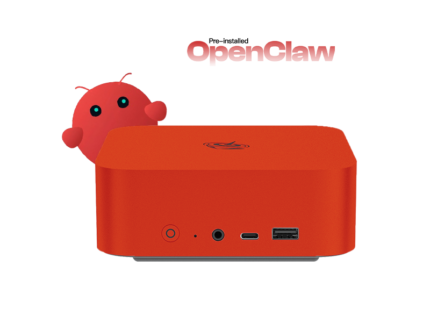

Beelink SER9 MAX AMD Ryzen™ 7 H 255 (OpenClaw Pre-Installed)
Price range: $959.00 through $1,239.00
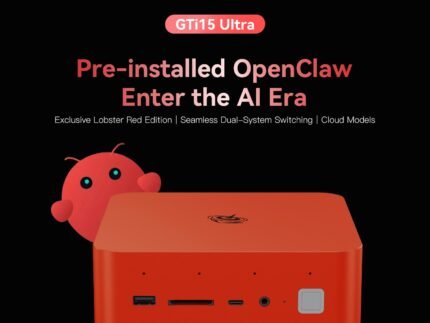
Beelink GTi15 Ultra Intel® Core™ Ultra 9 285H (OpenClaw Pre-Installed)
Price range: $1,499.00 through $1,999.00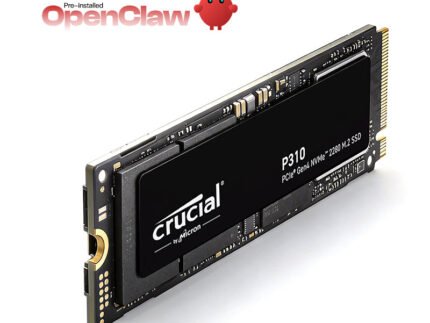

Pre-installed OpenClaw SSD Upgrade Kit
Price range: $189.00 through $529.00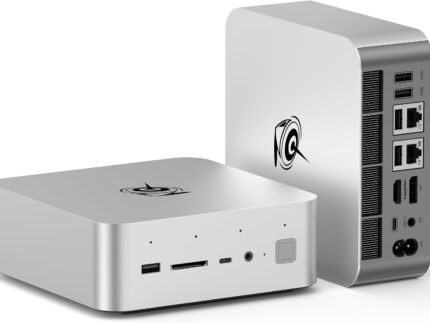

Beelink GTi15 Ultra Intel® Core™ Ultra 9 285H
Price range: $1,499.00 through $1,949.00
Imogen T. –
Using mesh networking to link several Wormhole cards for distributed lab experiments. Works well once you’re comfortable with TT-Metalium – it took some ramp-up time but the documentation has been improving steadily.
Casper L. –
Love having genuine low-level access instead of a black-box driver stack. Ended up submitting a small kernel patch upstream after digging into the TT-Metalium source, which just isn’t something you can do on mainstream GPUs.
Priyanka D. –
PhD research into alternative AI accelerator architectures and this has been exactly what I hoped for – properly low level, and the Discord community answers questions fast.
Julian F. –
Two Tensix processors on one card is great value for mesh networking experiments. Took a weekend to get the toolchain properly set up but it’s been dependable ever since.
Wesley N. –
Bought this specifically to get away from black-box AI hardware, and on that front it delivers exactly what it promises. Fair warning though – the software stack is still rough compared to CUDA and you’ll spend real time reading source code rather than following polished tutorials. Worth it if you actually want to understand the hardware, not so much if you just want it to work out of the box.