
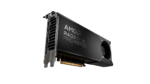
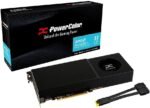
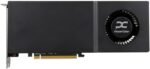
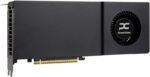
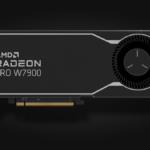
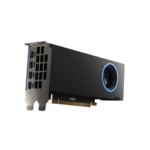

AMD Radeon AI PRO R9700 (32GB)
$1,299.00
AMD’s RDNA 4 AI workstation GPU: 32GB GDDR6, built for local inference and fine-tuning.
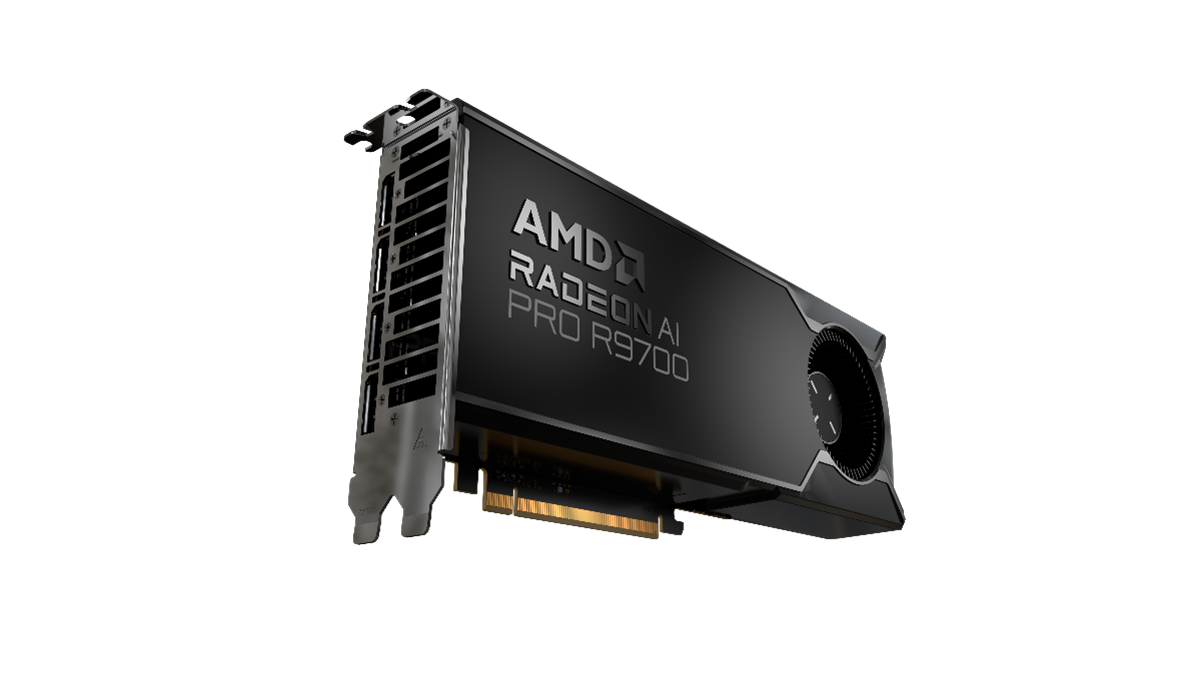
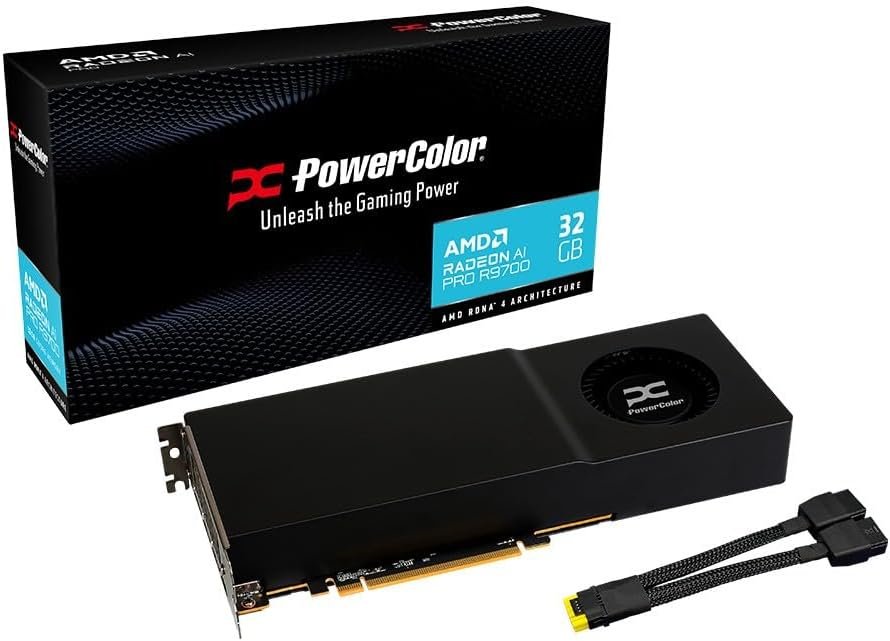
The AMD Radeon AI PRO R9700 is AMD’s first RDNA 4 workstation card, purpose-built for the wave of teams who want serious local AI capability without stepping up to a 48GB flagship card or a datacenter GPU. With 32GB of memory, a 2-slot blower design, and a genuinely competitive price for its class, the R9700 is aimed squarely at AI developers, data scientists, and technical creators who need local inference and fine-tuning headroom on a workstation budget.
Key Features
- RDNA 4 architecture (Navi 48) — AMD’s newest GPU architecture, built on TSMC’s 4nm process, bringing a generational leap in AI-specific hardware over the previous RDNA 3 workstation cards.
- 32GB GDDR6 on a 256-bit bus — running at 20Gbps for 640GB/s of bandwidth, enough to comfortably run quantized LLMs in the 30B+ parameter range or fine-tune smaller models entirely on-card.
- 64 Compute Units, 4,096 Stream Processors — plus 64 second-generation Ray Accelerators for professional rendering and visualization work.
- 128 second-generation AI Accelerators — up to 95.7 TFLOPS of dense FP16 compute and up to 1,531 TOPS of INT4 performance with sparsity, purpose-built for modern quantized inference workloads.
- Multi-GPU scaling — pool memory and compute across multiple R9700 cards for larger models than a single card can hold, at a fraction of the cost of scaling with flagship workstation GPUs.
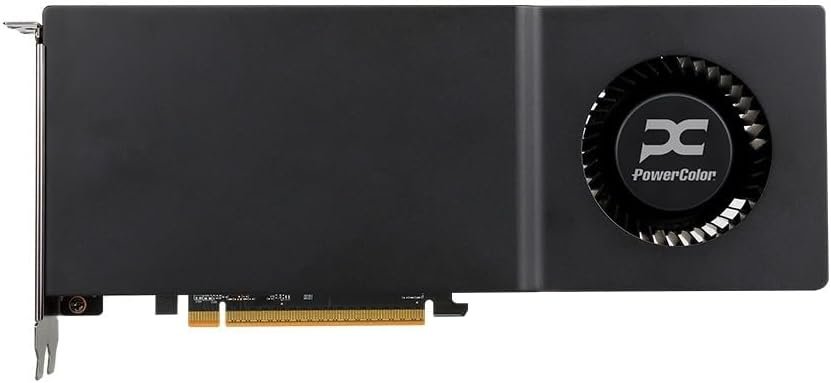
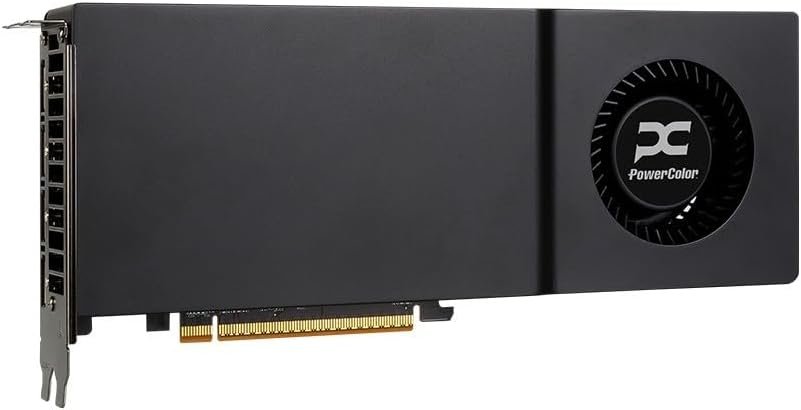
- 2-slot blower cooling — a genuinely compact, workstation-friendly form factor that supports dense multi-GPU builds without the space and airflow demands of larger cards.
- Quad DisplayPort 2.1a outputs — full multi-monitor support for engineering and creative workstation use alongside AI workloads.
- ROCm on Linux and Windows — an open software stack for AI development, with official support on both major desktop operating systems.
Purpose-Built for Local AI Development
The R9700 occupies a genuinely useful niche: more memory and AI-specific hardware than any consumer gaming GPU at a similar price, without the cost jump to a 48GB flagship workstation card. For AI developers running local inference on open-weight models, fine-tuning smaller architectures, or building and testing RAG pipelines before deploying to cloud infrastructure, 32GB is a sweet spot — enough for meaningfully large quantized models, without the premium of the very largest memory pools. The 128 second-generation AI Accelerators are specifically tuned for the low-precision matrix math (INT4, INT8, FP8) that dominates modern LLM inference, which is where AMD has focused RDNA 4’s biggest architectural gains over RDNA 3.
For teams building multi-GPU AI workstations, the R9700’s compact 2-slot blower design and multi-GPU scaling support mean you can realistically fit several cards in one chassis to pool memory for larger models — a build strategy that’s considerably more affordable per gigabyte of usable VRAM than a single flagship card, provided your framework and workload can take advantage of multi-GPU sharding. Creative and technical professionals also benefit from the same hardware for GPU-accelerated rendering and data-heavy visualization work, not just pure AI inference.
As with any AMD professional card, it’s worth setting expectations on software: ROCm has matured significantly and is officially supported on this card across both Linux and Windows, but framework compatibility and out-of-the-box performance still generally trail CUDA on the newest, most experimental AI research code. For teams running mainstream inference stacks (llama.cpp, vLLM, PyTorch with ROCm backends) rather than bleeding-edge research repos, the R9700 delivers strong practical performance at a price point that undercuts comparable-memory NVIDIA workstation cards substantially.
For a workstation builder evaluating options, the R9700 is best thought of as the entry point into serious local AI hardware: it sits above consumer gaming GPUs in both memory and dedicated AI throughput, while staying meaningfully cheaper per gigabyte than the 48GB-and-up professional tier. That makes it a sensible first purchase for a team just standing up local inference infrastructure, and an easy card to scale out once the workload and framework choices are proven.
Specifications
- Architecture: AMD RDNA 4 (Navi 48), TSMC 4nm
- Compute Units: 64 (4,096 Stream Processors)
- Ray Accelerators: 64 (2nd-gen) / AI Accelerators: 128 (2nd-gen)
- Memory: 32GB GDDR6, 256-bit bus, 20Gbps
- Memory Bandwidth: 640GB/s
- Compute Performance: 47.8 TFLOPS FP32 / 95.7 TFLOPS FP16 / up to 1,531 TOPS INT4 (sparse)
- Clocks: 1,620MHz base / 2,920MHz boost
- Total Board Power: 300W
- Power Connector: 1x 12V-2×6
- Interface: PCIe 5.0
- Form Factor: 2-slot blower
- Display Outputs: 4x DisplayPort 2.1a
- Launch: July 2025, MSRP $1,299
5 reviews for AMD Radeon AI PRO R9700 (32GB)
Related products


Lenovo ThinkStation PGX GB10 1T LINUX Workstation (30KL0002US)
Price range: $5,849.00 through $7,879.00

Beelink SEi14 AI Intel® Core™ Ultra 9 185H
Original price was: $2,199.00.$2,059.00Current price is: $2,059.00.

Beelink SER9 MAX AMD Ryzen™ 7 H 255 (OpenClaw Pre-Installed)
Price range: $959.00 through $1,239.00

Beelink GTi14 Ultra AI PC Intel® Core™ UItra 9 185H (OpenClaw Pre-Installed)
Price range: $1,099.00 through $1,399.00

Beelink SER9 Pro AMD Ryzen™ 7 H 255 (OpenClaw Pre-Installed)
Price range: $759.00 through $1,029.00
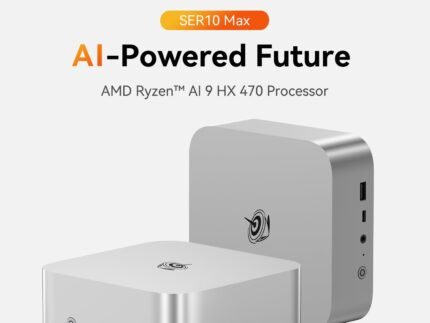
Beelink SER10 MAX AMD Pro Ryzen™ AI 9 HX 470
Price range: $1,299.00 through $1,599.00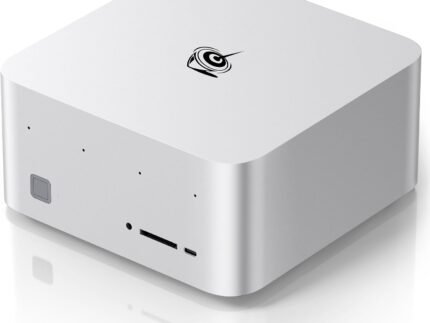
Yara N. –
Handles my data-heavy DaVinci Resolve grading work alongside local AI upscaling without either task fighting the other for resources.
Bianca F. –
Pleasantly surprised that ROCm on Windows actually works properly now – had a couple of minor hiccups with a less common framework but my core PyTorch workflow has been solid from day one.
Alex M. –
Running quantized 30B parameter models locally without any drama. 32GB gives real headroom over the 24GB cards I was comparing it to.
Sam O. –
Great hardware for the money, just be aware some AI toolchains still assume CUDA first so I had to wait a few weeks for ROCm ports of a couple of libraries I needed. Once they landed, everything’s worked well.
Kieran W. –
Bought two for pooled memory fine-tuning work. 64GB combined for well under what a single equivalent Nvidia workstation card costs – brilliant value.