
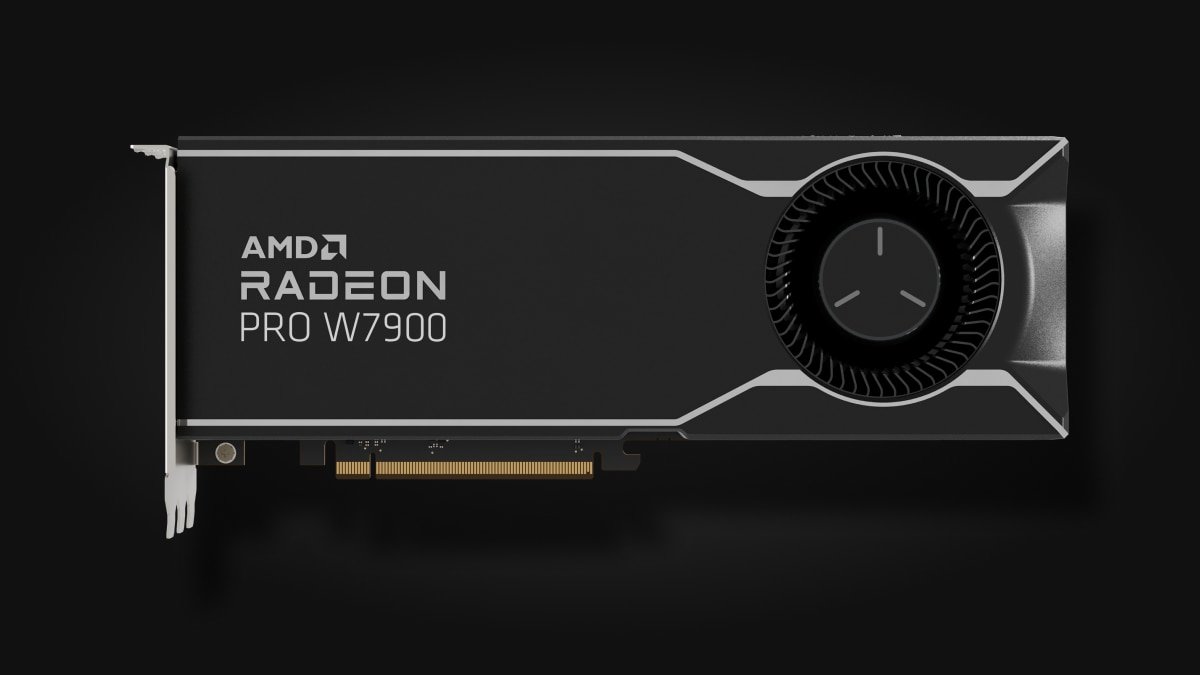
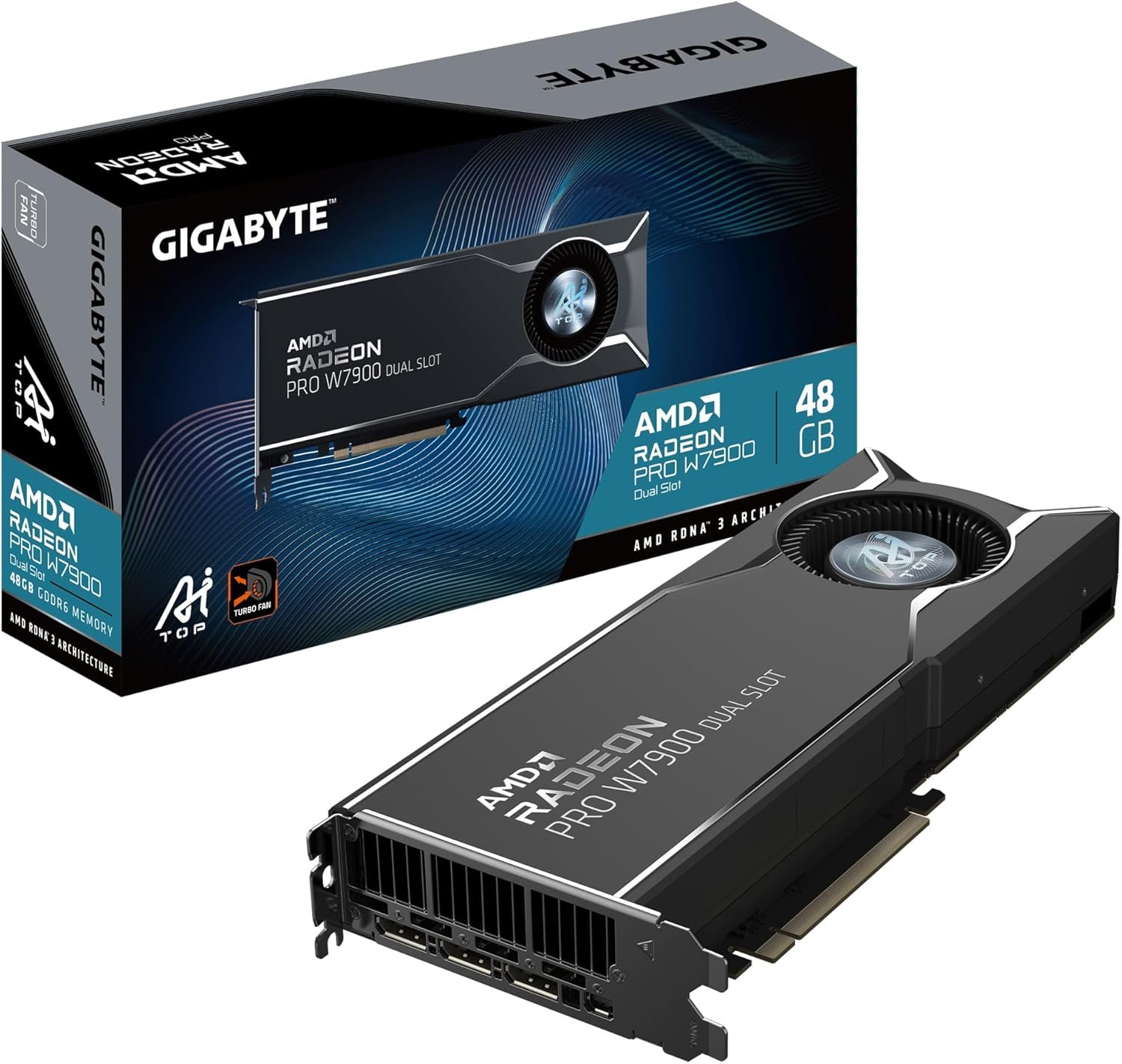
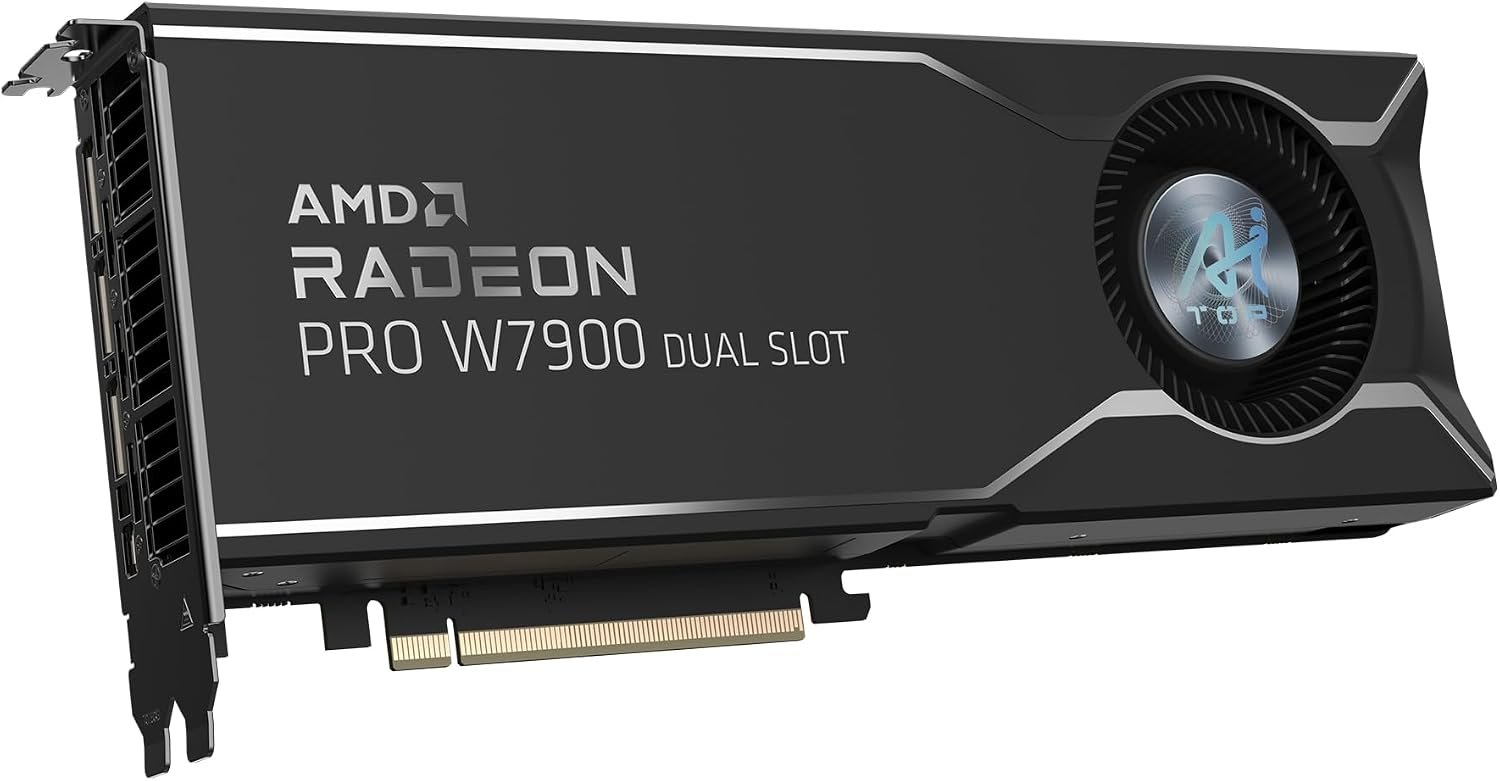
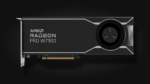
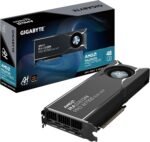
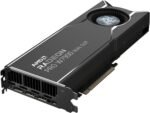
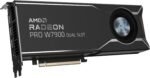


AMD Radeon PRO W7900 (48GB)
$3,999.00
AMD’s flagship workstation GPU: 48GB ECC GDDR6 for large models and professional rendering.
The AMD Radeon PRO W7900 is AMD’s flagship workstation graphics card, and its defining feature is simple: 48GB of ECC-protected memory on the full RDNA 3 Navi 31 die, in a dual-slot form factor that fits real workstation chassis. For studios and engineering teams running large AI models, professional rendering pipelines, or scientific visualization workloads that outgrow a 24GB consumer card, the W7900 offers datacenter-class capacity without datacenter pricing or power draw.
Key Features
- 48GB ECC GDDR6 — the full Navi 31 memory configuration on a 384-bit bus, enough to run 30B-parameter class LLMs, hold entire production scenes, or process massive point-cloud and CAD datasets entirely on-card, with error-correcting code protection for professional reliability.
- 96 Compute Units, 6,144 Stream Processors — the full Navi 31 die, unlocked for workstation workloads rather than gaming clocks.
- 96 second-generation Ray Accelerators, 192 AI Accelerators — dedicated hardware for professional ray-traced rendering and AI-assisted workflows.
- 864GB/s memory bandwidth — keeps the compute units fed when working with the massive datasets this card’s memory capacity enables.
- 61 TFLOPS FP32 / 122 TFLOPS FP16 — strong compute for rendering, simulation, and mixed-precision AI workloads.
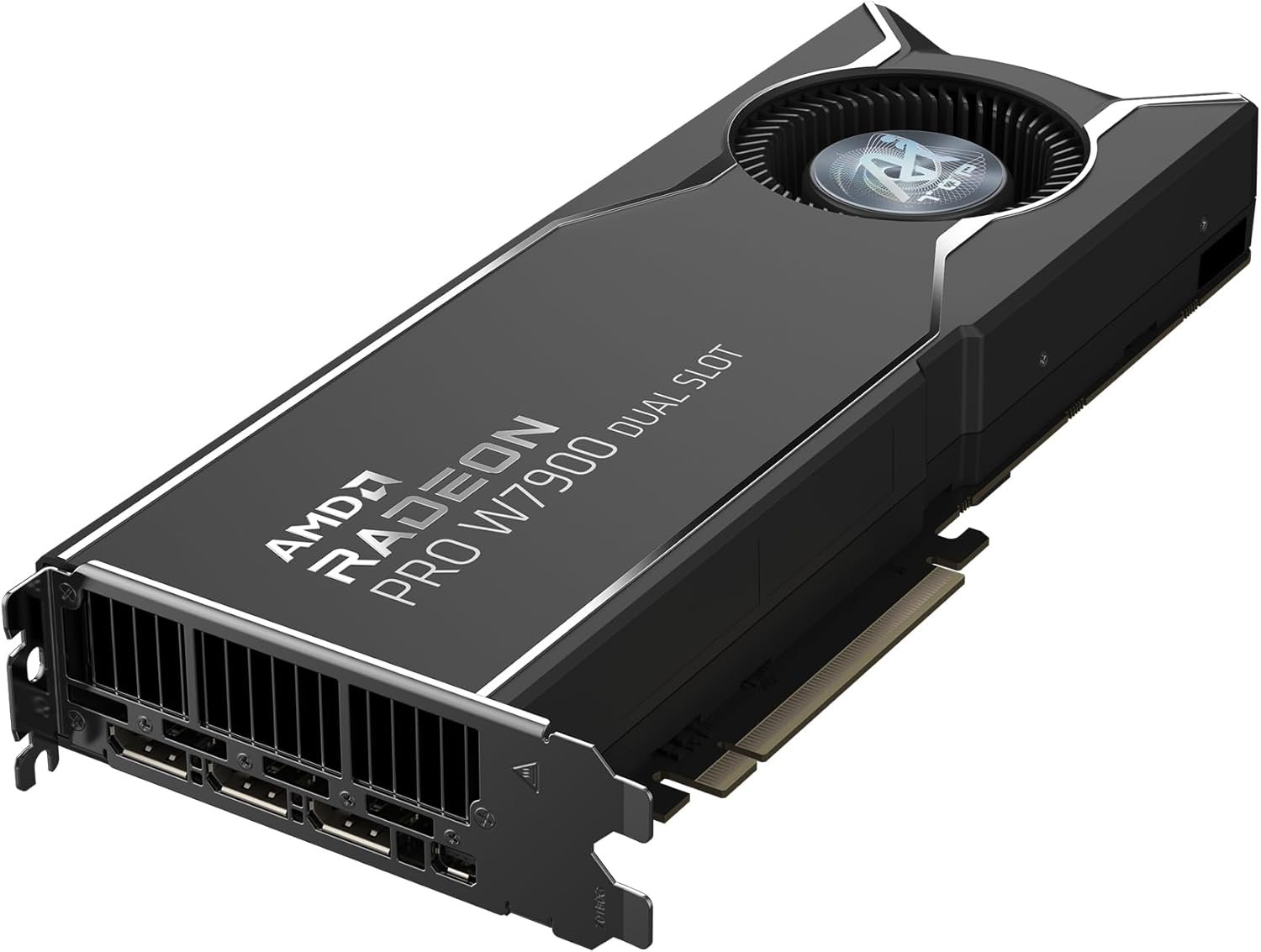
- Dual-slot workstation design — a considerably more space-efficient footprint than earlier triple-slot professional cards, letting integrators fit up to four W7900s in a single multi-GPU workstation.
- ROCm certified — validated for professional AI and ML development, with ISV-certified drivers for major CAD, DCC, and simulation applications.
- Quad DisplayPort 2.1 outputs — three full-size DisplayPort 2.1 plus one mini-DisplayPort 2.1, each capable of 54Gbps for high-resolution multi-monitor CAD and visualization setups.
Large-Memory Compute for AI, Rendering, and Simulation
The case for the W7900 is almost entirely about memory headroom. At 48GB, it sits well above every mainstream consumer GPU and matches or beats many competing professional cards at a lower price point, which matters enormously for AI teams working with LLMs and diffusion models that simply won’t fit — or won’t fit comfortably alongside a large batch size — in 24GB. Fine-tuning mid-size open-weight models, running multiple models resident simultaneously for a production inference pipeline, or working with uncompressed 3D scan and point-cloud data all become dramatically easier when the dataset doesn’t have to be chunked or offloaded to system memory.
For rendering and visualization professionals, the same memory advantage applies directly: complex architectural and product visualization scenes, full-resolution VFX shots, and simulation caches can be held entirely in GPU memory, which keeps interactive viewport performance smooth even on the heaviest projects. AMD’s ISV certification program means the W7900 is validated against the professional applications studios actually rely on, not just consumer benchmarks.
Where honesty matters most is software maturity: ROCm has made real strides and is officially supported and certified for this card, but the CUDA ecosystem still has a head start in raw framework coverage, especially for bleeding-edge AI research code that assumes NVIDIA hardware by default. For teams already standardized on PyTorch and mainstream inference frameworks, ROCm on the W7900 is a genuinely capable, well-supported path — and one that comes with substantially more memory per pound than the equivalent CUDA-based workstation card. For teams whose workflows are rendering- and CAD-first rather than bleeding-edge AI research, the W7900’s ISV certifications and driver stability make it a low-risk, high-capacity upgrade.
It’s also a genuinely cost-effective alternative to scaling out with multiple smaller GPUs just to reach a usable memory footprint: one W7900 replaces what would otherwise take two or more 24GB cards, without the added system complexity, driver overhead, or PCIe lane contention of a multi-GPU build. For engineering firms and studios standardizing their workstation fleet, that simplicity — a single ECC-protected, ISV-certified card per seat — is often worth as much as the raw compute numbers on the spec sheet.
Specifications
- Architecture: AMD RDNA 3 (full Navi 31 die)
- Compute Units: 96 (6,144 Stream Processors, 192 AI Accelerators, 96 Ray Accelerators)
- Memory: 48GB ECC GDDR6, 384-bit bus
- Memory Bandwidth: 864GB/s
- Compute Performance: 61 TFLOPS FP32 / 122 TFLOPS FP16
- Clocks: 1,855MHz core / 2,495MHz boost
- Total Board Power: 295W
- Power Connectors: 2x 8-pin PCIe
- Interface: PCIe 4.0 x16
- Form Factor: Dual-slot workstation card, 280mm length
- Display Outputs: 3x DisplayPort 2.1 + 1x mini-DisplayPort 2.1
- Software: ROCm certified, ISV-certified professional drivers
5 reviews for AMD Radeon PRO W7900 (48GB)
Related products




Beelink SEi14 AI Intel® Core™ Ultra 9 185H
Original price was: $2,199.00.$2,059.00Current price is: $2,059.00.

Beelink GTR9 Pro AMD Ryzen™ AI Max+ 395 Processor (OpenClaw & Local LLM Pre-installed)
Price range: $4,349.00 through $4,749.00

Beelink SER10 MAX AMD Pro Ryzen™ AI 9 HX 470 (OpenClaw & Local LLM Pre-installed)
Price range: $1,339.00 through $2,299.00

Beelink SER9 PRO AMD Pro Ryzen™ AI 9 HX 370 (OpenClaw & Local LLM Pre-installed )
Price range: $1,169.00 through $1,389.00
Willow C. –
Worth being honest – render times in Redshift and V-Ray are noticeably behind what an equivalent Nvidia card would do, and a couple of my plugins are still waiting on better ROCm support. For Blender with HIP-RT and anything memory-bound though, it’s been excellent value and I’d buy it again for that use case.
Layla M. –
Daily driver for SolidWorks and CATIA and the ISV-certified drivers have been rock solid for over a year now, no viewport corruption or crashes.
Jasper H. –
48GB lets me keep entire film asset libraries resident in memory. Compared to what an equivalent-memory Nvidia card would cost, this was an easy decision.
Ravi P. –
Scientific visualization work with genuinely massive datasets – the combination of ECC memory and 48GB means I don’t have to think about memory management anymore.
Erin D. –
The triple-slot blower cooler is definitely audible when the card is under full load for extended renders, but for the price-per-GB of memory I can’t really complain.